Home > Resources > Case studies > Integrated multilingual solutions for international retail
Integrated multilingual solutions for international retail
How a centralised platform turned multilingual content production into a growth driver for a retailer
The background: a European retailer facing the challenges of multilingual expansion
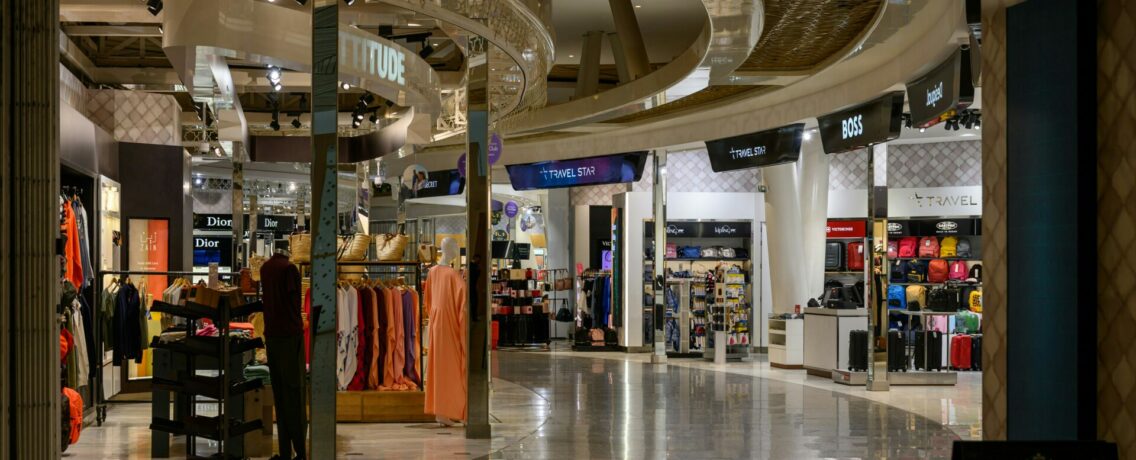
Our client is a fast-growing European retailer operating in six countries through physical stores and digital channels (its own website and marketplaces). This international presence involves producing content in six to eight languages.
The business is characterised by strong seasonality and rapid turnover of product range. Each season brings 4,000 new products requiring multilingual regulatory labelling, merchandising materials for retail outlets, product sheets for the e-commerce site and marketplaces, as well as training materials for international sales teams.
The strategic challenge was to maintain the quality and consistency of multilingual communications across all channels, while keeping pace with the increasingly tight production deadlines imposed by the sector.
The diagnosis: performance curtailed by organisational fragmentation
The initial audit revealed a siloed organisation in which each department managed its own language requirements independently, using its own service providers. This fragmentation created a number of major issues that adversely impacted costs, lead times and quality.
Lack of terminology governance
Without a centralised reference system, inconsistencies in terminology were common. The same product could be described differently depending on the medium: the label, the website and the catalogue did not use the same terminology. As a result, the teams had to spend a lot of time manually checking and harmonising content, a tedious task that could have been avoided with a shared repository.
Bottlenecks in the production line
Translation deadlines were consistently putting pressure on product launch schedules. To meet deadlines, themarketing, merchandising and e-commerce teams were forced to plan ahead using incomplete product information which inevitably led to costly errors: labels had to be reprinted, urgent corrections made to web pages, and sometimes even product launches were delayed, which had a direct impact on sales. The cost of these errors was estimated at around €40,000 a year.
Technical ecosystem disconnected from linguistic processes
The client had a structured technical environment comprising a PIM (Product Information Management) system for centralising product data, a CMS (Content Management System) for managing the website, platforms for managing the marketplaces and an LMS (Learning Management System) for in-house training. However, none of these systems was connected to the language management tools. Content for translation had to be extracted manually, sent to various service providers via Excel or Word files, and then manually uploaded back into each system after translation. This lack of integration between business tools and language workflows led to frequent interruptions in the workflow, increased the risk of human error and caused significant delays in publishing multilingual content online.
Orkera’s solution: a centralised platform and integrated workflows
The solution deployed was based on an integrated approach involving a centralised platform serving as the single hub for all multilingual content production. This platform was seamlessly connected to the client’s existing systems and production workflows of translated and multilingual content were completely overhauled.
Mapping data flows and defining workflows
The first step involved mapping out content flows in collaboration with stakeholders. This analysis enabled us to define specific workflows tailored to each type of content: regulatory content requiring absolute precision and rigorous validation; marketing descriptions requiring creativity and cultural adaptation; and technical content requiring strict terminological consistency.
For each workflow, the stages requiring decision-making, approval or human intervention were clearly identified and automated where appropriate.
A self-service portal to increase independence
A self-service portal now gives teams access to AI translation tools.. However, this autonomy does not mean there is no oversight: quality is ensured by terminology glossaries developed specifically for the brand and style guides tailored to each language. This drastically speeds up production cycles for standard content, while maintaining a high standard of quality.
A modular professional translation service for strategic content
For high-value content – marketing campaigns, strategic product launches, sensitive communications – a professional translation workflow, also based on AI, was introduced with several service levels. This allowed the client to tailor the level of linguistic refinement to the expected business impact, ensuring excellence where it really matters, while optimising costs on more factual content.
Terminology governance as the foundation of consistency
A systematic process of extracting, approving and continuously updating glossaries ensures consistency in translations across all media. Local teams play an active role in this process, contributing their cultural and linguistic expertise in order to refine translation choices and ensure relevance in each market. This organic framework evolves alongside the company and its products.
Technical integration to transform the user experience
The platform was integrated with the PIM to automatically retrieve new product pages for translation, with the CMS and e-commerce tools to enable the direct publication of approved content, and with the LMS to facilitate the roll-out of multilingual training modules. Invisible to end users, this orchestration eliminates bottlenecks and significantly speeds up time to market.
The results: operational gains and a measurable commercial impact
Six months after the solution was fully rolled out, the results are measurable and exceed the initial targets. The impact is evident in three areas: operational efficiency, cost control and commercial performance.
A significant operational transformation
The teams have freed up the equivalent of one full-time post previously allocated to coordination and verification. Production cycles have been reduced by 40%, thereby enabling the client to consistently meet launch deadlines. Costly errors – such as reprints, urgent corrections and website updates – have fallen by nearly 75%, freeing up staff to focus on higher valued-added tasks.
A convincing financial case
The annual investment in the platform and support services amounts to €90,000 (€40,000 for the platform subscription and €50,000 for additional services including consultancy, terminology management and project management). The solution was a welcome replacement for the old system, which cost 18€180,000 per year for ad hoc translations, internal coordination and error management. The net operating gain was therefore €90,000 per year.
A game-changing commercial impact
The true return on investment is reflected in the sales figures. Thanks to multilingual communications that were more consistent, faster and better adapted to local cultures, our client reported a 5% increase in its international turnover. Based on a figure of €50 million, this represents €2.5 million in additional revenue, generating €750,000 in additional gross profit. In total, the annual net gain is close to €900,000, representing a return on investment nearly ten times the initial outlay.
A sustainable system in the face of high staff turnover
Besides the figures, one organisational benefit stands out: the system’s sustainability. In an industry characterised by high staff turnover, having a structured framework, intuitive tools and robust guidelines ensures that quality is maintained over time. New recruits are up to speed more quickly, best practices are put to good use and brand consistency is maintained despite staff changes.
Synthèse du retour sur investissement
| Indicateur | Montant annuel |
|---|---|
| SITUATION INITIALE | |
| Traductions dispersées (8 000 réf. × 10 €) | 80 000 € |
| Coordination interne (1 ETP) | 60 000 € |
| Erreurs et corrections | 40 000 € |
| TOTAL des coûts annuels avant intervention | 180 000 € |
| COÛT ANNUEL DU SERVICE ORKERA | |
| Plateforme + Services | 90 000 € |
| ⇨ ÉCONOMIE OPÉRATIONNELLE NETTE | 90 000 € |
Impact Commercial
- Croissance CA international (+5% sur 50 M€) : +2 500 000 €
- Marge commerciale additionnelle (30%) : +750 000 €
What are your language projects?
This case study illustrates how an operational need can be turned into a strategic advantage. A properly implemented multilingual management platform does more than just produce translations: it streamlines the organisation, ensures brand consistency and supports international growth.
Orkera supported the client through this journey of development, from the initial fragmented state to an integrated language governance framework, aligning all teams around a common set of standards and optimised processes. The result is a more agile, more cohesive and more effective organisation on the international stage.