EuropaTrad becomes Orkera. Same team, same commitments, broader expertise. Find out why

Video translation: four main solutions

Understand the ins and outs of effective video translation

Video translation is now a powerful lever for reaching international audiences, making your content accessible in multiple languages and enhancing your brand visibility.

The first stage begins with transcription of audio and video content into text, for translation into the required languages. This is then integrated in the video in the form of subtitles or dubbing. Video translation applies to the most widely consumed types of digital content today: webinars, promotional videos, tutorials, training materials, YouTube videos, various social network content, video games, films, etc.

The goal is to ensure that the message you wish to convey is understood, without loss of meaning or impact, by each viewer in their native language. A high quality, duly localised video translation enhances the clarity of your message and the credibility of your company.

There are also significant gains in terms of search engine optimisation: translated or subtitled video content is better indexed, mainly due to the associated text content, thereby offering a real advantage in an international SEO strategy.

If you want to have your videos translated, you have a range of services available to you today, which will help you achieve more accuracy, more speed, or both, depending on your needs and the desired level of quality.

But how to choose between a low-cost online automatic video translation service and a more expensive subtitling or dubbing service involving professional translators? Why is there such a wide range of values, with prices ranging from a few cents to €40 or more per minute? What is the added value brought by subtitling professionals and a specialist audiovisual translation agency? Is investing in video translation by a language service provider a sustainable option?

To answer these questions, here is an overview of the four main solutions, which correspond to different service levels:
Video translation

CONTENTS

Fully automatic subtitling

Fully automated subtitling is the fastest and most economical option for a video translation, but is not the most reliable because the finished product is often highly approximative. It is often not accurate enough for an important project or for videos where intelligibility or sound clarity are sub-optimal.

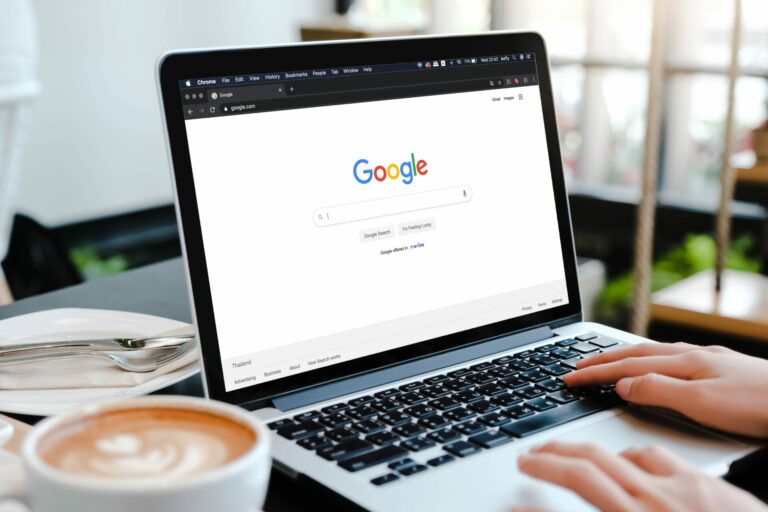
YouTube, for example, is one of the most commonly used platforms for video transcription and subtitling. Based on the automatically generated text (transcription) in the source language, Google Translate automatically translates the text and creates subtitles in the target language.

This can seem very convenient, particularly given that the result is produced in almost no time. However, while it generates subtitles for all types of videos, there are many transcription errors, misinterpretations and mistranslations. Entirely based on AI, this type of translation produces many mistakes and inaccuracies. Automatically generated subtitles become tedious to read and even irrelevant, thereby reducing the value of the translated video, particularly for professional use.

In short, it is not the best option for the translation of your professional videos.

Video translation

Subtitling with professional translation

This method is based on accurate and reliable translation carried out by specialised professional translators with minimal adjustments to the image. Therefore, synchronisation of the subtitles with the audio/video is not perfect. This is a good solution for situations where you want to subtitle content in other languages without focusing on the quality of the synchronisation itself.
The drawback of this solution lies in discomfort for the audience caused by any time lag between the image and the text.

In addition to annoying readers of the subtitles, it may even get in the way of your message being conveyed.

Despite this limitation, this type of video translation is perfectly suited to the following content types:

  • time-limited internal or confidential videos,

  • content where understanding the message takes precedence over timing: management messages, results presentations, in-house tutorials, training modules.

In this context, the professional takes charge of the entire process:

  • Transcription icon Manual transcription in the source language
  • Translation icon Professional translation with terminological consistency
  • .srt file icon Creation of a .srt file ready for integration into your video
Video translation

Premium subtitling

Premium subtitling is the go-to method for demanding corporate clients requiring accurate linguistic and visual matching of the subtitles to the video. It is distinguished by smooth subtitle display, precise alignment with speech and perfect harmonisation with the target language and your brand house style. It is more expensive, as it involves many stages.

Its application is ideal for educational and training videos that will be viewed many times, as well as product presentations, sales and marketing videos, and any other priority content where accuracy is important.

Step by step, this service includes:

  • A professional translator carries out the transcription in the source language and then prepares the timing.
  • They proceed with translation of the transcribed text.
  • Next, they perform precise cueing (timecode) of the translation according to the audio and image (adapting the length of sentences and reorganising).
  • Lastly, they take care of embedding or overlaying the subtitles in the image, so as to make them as legible as possible.

If required, subtitles can also be adapted to a specific graphic charter for your brand.

In addition, SEO translation can be carried out before the content itself is translated, to select the most effective keywords in the target language and include them in the subtitles, thereby improving natural referencing.

Naturally, the translation’s quality is enhanced by the use of CAT tools.

A series of tools and software solutions are used, including for transcription, CAT (Computer Assisted Translation, based on translation memories) and video editing. The video is produced and delivered to the client with fully integrated and edited subtitles.

It is the ideal solution for:

  • Training icon Videos for recurring use
    (training, onboarding, e-learning courses)
  • Marketing icon Publicised
    sales & marketing content
  • Product icon Product presentations
    and brand videos

If required, subtitles can also be adapted to a specific graphic charter for your brand.

In addition, SEO translation can be carried out before the content itself is translated, to select the most effective keywords in the target language and include them in the subtitles, thereby improving natural referencing.

Computer-assisted translation (CAT) tools are used to ensure consistency through the use of translation memories, glossaries and terminology bases.

A series of software solutions are used, including transcription, CAT and video editing software. The video is produced and delivered to the client with fully integrated and edited subtitles.

Video translation

Dubbing

This is the most comprehensive method, enabling faultless and smooth intelligibility for viewers. It conveys both the meaning and emotions contained in the video. It ensures that everything sounds right in your audience’s language.

There are two possible techniques:

Human voice dubbing

Human voice dubbing requires a significant budget, because, in addition to the same preparatory steps involved in subtitling (transcription and translation), it requires a recording session with one or more voice actors. You will need to budget for a recording studio and sound engineering professionals.

This is an excellent investment for a video that will be widely viewed, is important for marketing, will have long-term visibility and must be available in the language spoken by all your audiences.

From the beginnings of film and video media, dubbing has been performed by recording actors whose voices are selected to match the original voices in the source language.

However, a new, more affordable AI-based approach has been developed, where the dubbing is generated by a synthetic voice. While the emotional dimension is reduced, and the result is slightly unnatural, this kind of dubbing is sufficient for many professional uses, providing a satisfactory listening comfort for people viewing the translated video. It offers an intermediate quality solution between subtitling and traditional dubbing.

Dubbing with a synthetic voice is therefore a handy solution to get controlled and quality dubbing of your brand’s content, even if the target audiences remain limited. It is perfectly suitable, for example, for the translation of a webinar or conference.

Synthetic voice dubbing

While traditional dubbing offers emotional authenticity, another more accessible option has gained popularity in recent years, namely AI-generated synthetic voice dubbing. While the emotional dimension is reduced, and the result is slightly unnatural, this kind of dubbing is sufficient for many professional uses, providing a satisfactory listening comfort for people viewing the translated video. It offers an intermediate quality solution between subtitling and traditional dubbing.

Dubbing with a synthetic voice is therefore a handy solution to get controlled and quality dubbing of your brand’s content, even if the target audiences remain limited. It is perfectly suitable, for example, for the translation of a webinar or conference.

Video translation

Why opt for a language service provider rather than a low-cost solution?

There are many reasons: while a low-cost solution (an online platform providing an automatic subtitling service) may be less expensive in the short term, it can only carry out basic tasks. You can call on the services of a language service provider when you need more sophisticated subtitling or dubbing; an LSP can provide the necessary expertise to produce a meticulously crafted, high-quality result.

An LSP will work on your message to make sure it is both clear and comprehensible, as well as on timing and cueing in order to guarantee a seamless viewing experience. In this scenario, working with an LSP will help achieve a totally finished product. You won’t have to worry about the fluency of the text: the LSP will take care of it for you.

Because we possess this expertise, we understand that you do not want to compromise on the quality of your content and are here to help you achieve your aims. We provide professional, personalised translation services with controlled lead times and costs, so you can focus on what matters: your message.

Our translation team is made up of native speakers with extensive experience in translation and subtitling technologies, as well as the use of translation tools. You can be assured that we will deliver high-quality translations that meet all the required standards.

What are your language projects?

Let’s work together to develop your multilingual strategy